

Vocal Synth Symposium logo Vocal Synth Symposium 2026

Vocal Synth Symposium 2026

A one-day academic symposium on synthetic voices and virtual idols around the globe, spanning across industry and fan culture. Hosted by King’s College London Department of Digital Humanities and Vocaloid Society, the symposium features several talks and interventions, the KCL Vocaloid Fandom research project launch, an industry-featured talk by AHS/Dreamtonics, and a roundtable Q&A.

Programme

Symposium timings

  1. 12:50

    Audience arrival

    Dreamtonics software demo booths will be running during this time.

  2. 13:05 – 13:10

    Welcome

  3. 13:10 – 13:50

    Vocaloid Fandom Project Launch (King’s College London Department of Digital Humanities)

    Short interventions

  4. 13:50 – 14:00

    Talk · Rongzhi Zhou (University of Warwick)

    Belonging to a Transcultural Fandom: UK Fan Communities of the Japanese Vocaloid Culture

  5. 14:00 – 14:10

    Talk · Illinois Vocaloid Research Group (University of Illinois Urbana-Champaign)

    Inter-lingual Covers for Vocaloid Songs: Case Studies

  6. 14:10 – 14:30

    Talk · Patty Ayukawa (University of Tokyo)

    New Sensibility called "Anti-Sexual": Japanese Queerness in Vocaloid Music

  7. 14:30 – 15:15

    Talk · Tomohide Ogata (AHS Co. Ltd. / Dreamtonics Co., Ltd.)Industry Featured Talk

    The History and Future of Voice Synthesis in the Age of AI

  8. 15:15 – 15:35

    Talk · Zirui Chen (Loughborough University)

    The Negotiation of Fan Prosumption and Free Labour in the Fandom of Chinese Virtual Idol Luo Tianyi

  9. 15:35 – 15:50

    Refreshment break · Roundtable setup

    Dreamtonics software demo booths will be running during this time.

  10. 15:50 – 16:50

    Featured Roundtable & Q&A

    Synthetic Voices between Japan, China, the UK, Industry, and Fan Culture. Audience Q&A will only take place in this session; please hold questions until then. If the room is quiet, the panel will continue the conversation among themselves.

  11. 16:50 – 17:00

    Closing remarks

Welcome video

A short welcome film will be launched here closer to the event.

Video Placeholder Welcome video (to be launched)

Room layout

Seating, demo booths, and roundtable configuration.

Room layout diagram
Image Placeholder Room layout diagram (to be launched)

Getting to the venue

Great Hall, King’s Building, King’s College London (enter via Strand Building, Strand, London WC2R 1ES)

Contributors

Speaker profiles

Tomohide Ogata portrait
Portrait assets/speakers/tomohide-ogata.jpg

Tomohide Ogata (Tomo) Industry

尾形友秀

Director, Dreamtonics  /  Chairman & Founder, AHS  /  Specially Appointed Professor, Seibu Bunri Univ.

Tomohide Ogata founded AHS in 2005, a company specializing in the planning and distribution of software products for creators. Prior to founding AHS, he spent nearly 30 years in the software industry. Today, AHS holds the No. 1 market share in Japan for music and utility software. In addition to his work in the software industry, Ogata is an active musician and serves as a Specially Appointed Professor at Seibu Bunri University.

AHS Co. Ltd.
Since 2005, AHS has specialized in the planning and distribution of software and hardware products primarily for creators. In addition to distributing VOCALOID products, the company developed the VOICEROID text-to-speech series. Today, AHS offers a diverse portfolio of voice synthesis products, with a particular focus on Synthesizer V and VOICEPEAK. The company currently holds the No. 1 market share in Japan.
Dreamtonics Co., Ltd.
Dreamtonics was founded in 2019 by Kanru Hua, the developer of Synthesizer V. In addition to Synthesizer V, the company develops and distributes a range of voice-related technologies and products, including VOICEPEAK and Vocoflex, serving users around the world.


Summary

With more than 40 years of experience in voice synthesis and a career spanning products such as VOCALOID, VOICEROID, Synthesizer V, and VOICEPEAK, this presentation explores the evolution of voice synthesis from the perspective of the companies behind these technologies. Looking back on the industry's history, the session also offers insights into the future of voice synthesis and the direction the technology is heading.
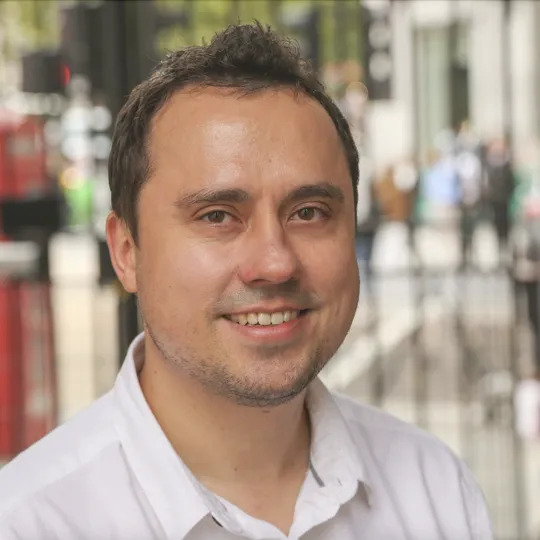

Dr Rafal Zaborowski portrait
Portrait assets/speakers/rafal-zaborowski.jpg

Dr Rafal Zaborowski

King’s College London, Department of Digital Humanities

Rafal Zaborowski is Senior Lecturer in Digital Culture in the Department of Digital Humanities at King’s College London. His research explores media audiences, fandoms, platforms and popular culture, with a focus on how media shape everyday life and social participation. He is the author of Music Generations in the Digital Age: Social Practices of Listening and Idols in Japan. His recent work examines vocal synth communities, sociality, creativity and affect on digital platforms, alongside earlier research on voice, representation and the media framing of crisis and migration.


Summary

KCL Vocalo Fandom project launch: this talk introduces a new research project exploring participation, creativity and community in global vocal synth fandoms. It examines how fans engage with vocal synthesis technologies and related characters through listening, making, interpretation and community-building. Presentations by project members Dr Rafal Zaborowski, Emma Lin and Etiane Cheung will introduce the project’s aims, approach and emerging findings, and situate them within broader debates around digital fandom and participatory culture.

Emma Lin portrait
Portrait assets/speakers/emma-lin.jpg

K. Lin (Emma)

King’s College London / KCL Vocaloid Society

K. Lin is a Comparative Literature student at King’s College London whose research interests centre on contemporary literature, translation, cross-cultural studies, and digital fan cultures. Her current research as a King's Undergraduate Research Fellow examines participation and creativity within Vocaloid communities across Chinese and English-speaking contexts, with an interest in the relationship between digital platforms and community practices. She is also the founder and president of King’s College London Vocaloid Society and is co-organising this symposium. Find out more about what she does on her website: k-lin-k.github.io.


Summary

KCL Vocalo Fandom project launch: this talk introduces a new research project exploring participation, creativity and community in global vocal synth fandoms. It examines how fans engage with vocal synthesis technologies and related characters through listening, making, interpretation and community-building. Presentations by project members Dr Rafal Zaborowski, Emma Lin and Etiane Cheung will introduce the project’s aims, approach and emerging findings, and situate them within broader debates around digital fandom and participatory culture.

Etiane Cheung portrait
Portrait assets/speakers/etiane-cheung.jpg

Etiane Cheung

King’s College London

Etiane Cheung is a recent graduate of King’s College London, where she completed a BA in Modern Languages (French and Spanish) and was awarded the Jelf Medal, the Faculty of Arts & Humanities’ highest undergraduate distinction. She will begin an MA in Language & Cultural Diversity at King’s in September, with research interests in sociolinguistics, multilingualism, language learning, digital cultures, and the relationship between language and identity. As a King’s Undergraduate Research Fellow, her current research focuses on Francophone and Hispanophone multilingual Vocaloid fan communities, examining how their online presence reflects transnational community identity, archival practices, and language use within Western digital fan cultures.


Summary

KCL Vocalo Fandom project launch: this talk introduces a new research project exploring participation, creativity and community in global vocal synth fandoms. It examines how fans engage with vocal synthesis technologies and related characters through listening, making, interpretation and community-building. Presentations by project members Dr Rafal Zaborowski, Emma Lin and Etiane Cheung will introduce the project’s aims, approach and emerging findings, and situate them within broader debates around digital fandom and participatory culture.

Rongzhi Zhou portrait
Portrait assets/speakers/rongzhi-zhou.jpg

Rongzhi Zhou

周容止

University of Warwick

A former social science student who studied at the University of Warwick (Culture and Media Policy Studies) and University of Nottingham (in Ningbo, China). Now working at a Chinese company to sell refrigerators abroad. Also known as "hirayu" as my Vocaloid producer name, active on the Chinese video site Bilibili (you can also find some of my original music on YouTube). I have 13 years of experience in listening to Vocaloid. One of my favourite songs is Lost Unbrella by Inabakumori.


Abstract

This research is a fandom study that aims to unpack how UK members experience belonging to the fan community of Vocaloid, a niche yet expanding genre in the West within the Japanese media landscape. Through the interplay of belonging, collective identity, and a sense of community, the study explores how these transcultural fans negotiate fan identity and attach to a niche community. Using thematic analysis of 10 in-depth semi-structured interviews with members from Vocaloid societies in UK universities, the qualitative research employs an interpretivist paradigm to gain an in-depth understanding of subjective experiences and perspectives of individuals in the UK Vocaloid fan community.

Illinois Vocaloid Research Group photo
Group photo assets/speakers/uiuc-group.jpg

Illinois Vocaloid Research Group

University of Illinois Urbana-Champaign (UIUC)

The Illinois Vocaloid Research Group is a Registered Student Organization at the University of Illinois at Urbana-Champaign. The purpose of the group is to promote Cultural Studies and Multi-media Creations around the culture of Synthetic Vocals.


Abstract

In Vocaloid culture, “covers” play a central role in helping songs travel beyond their original versions. Through fan recreations and translations, Vocaloid music reaches new audiences and supports the growth of an international fandom. However, Japanese-to-English fan covers often reveal conflicts in cross-cultural understanding, especially when lyrical imagery depends on specific historical or cultural backgrounds. In this presentation, we focus on “Summertime Record” and “Senbonzakura” to examine how such misunderstandings appear, why translation in interlingual covers is especially difficult, and how better translations might be created through deeper cultural awareness. This is not a formal linguistic study, but a reflection on issues noticed by our club members, intended to raise awareness of cultural mismatch in fan translation.

Patty Ayukawa portrait
Portrait assets/speakers/patty-ayukawa.jpg

Patty Ayukawa

鮎川ぱて

University of Tokyo

Patty Ayukawa is a Vocaloid music producer, music critic and a researcher at the Research Center for Advanced Science and Technology (RCAST), the University of Tokyo.
As a critic, they have been highlighting that Vocaloid music fundamentally holds an ontological openness to queerness, encompassing diverse and atypical genders and sexualities.
The novelty of this argument gained attention, leading Patty to teach the world’s first university course dedicated solely to Vocaloid Music at the University of Tokyo starting in 2016. In 2023, they expanded their teaching to the Tokyo University of the Arts.
In 2022, Patty published their landmark work, The University of Tokyo’s “Studies on Vocaloid Music” Lectures, which has been widely read around the world. In the book, Patty proposes the concept of "anti-sexual" to describe the unique queerness of Vocaloid music, and conducts a detailed analysis of "anti-love songs" as works that embody this sensibility. They are currently researching how this Japanese queerness may have aligned with global trends, such as hyperpop.

Zirui Chen portrait
Portrait assets/speakers/zirui-chen.jpg

Zirui Chen

陈子芮

Loughborough University

Zirui Chen began her doctoral research in Communication and Media at Loughborough University in October 2023. Her research examines virtual idol fan practices on Chinese social media, with a particular focus on fan prosumption and fandom nationalism. Zirui’s research interests include digital culture, fan practices and virtual idols.


Abstract

The spectrum of fan prosumption practices in Luo Tianyi fandom reveals a fluid continuum rather than fixed categories. It provides the empirical foundation for understanding what fans do and why they prefer virtual idols for their features of personalisation and authenticity. Besides, this research also considers “how” these practices are socially organised and negotiated. It argues that Luo Tianyi’s fandom constitutes a stratified social space where fandom hierarchies, gender norms and ongoing negotiations with the media company coexist and shape fans’ participatory experiences.

Other contributors

  • Pineliquor

    Pineliquor

    Welcome video contributor · MA graduate, Nagoya University

  • Yuka Wong

    Dreamtonics Representative · Queen Mary University of London

  • Zefeng Wu

    Videographer · PhD candidate, King's College London

  • Sanpuko

    Illustrator/Welcome Video Music Composer · Imperial College London

About the organisers

King’s College London’s Department of Digital Humanities

kcl.ac.uk/ddh ↗

King’s College London’s Department of Digital Humanities (DDH) is pleased to co-host this symposium with the KCL Vocaloid Society. DDH is a global leader in research on digital culture and society and in the use of advanced digital methods in humanities research. Its interdisciplinary work brings together perspectives from the humanities, social sciences and computing, with research spanning digital cultures, technology, media and participation, data, digital economy and society as well as digital methods.

KCL Vocaloid Society logo

KCL Vocaloid Society

kcl-vocaloid.github.io ↗

Founded in 2024, King's College London Vocaloid Society (KCLVS) is a student-led university organisation focused on Vocaloid culture, the first of its kind in London. KCLVS's mission is to build a community for all university-aged enthusiasts of vocal synthesis technology, along with its spin-off subculture, as well as academics and producers in the field. For more information about their events and work, please refer to their website.